 COSIT 2026
Krzysztof Janowicz
Professor, University of Vienna
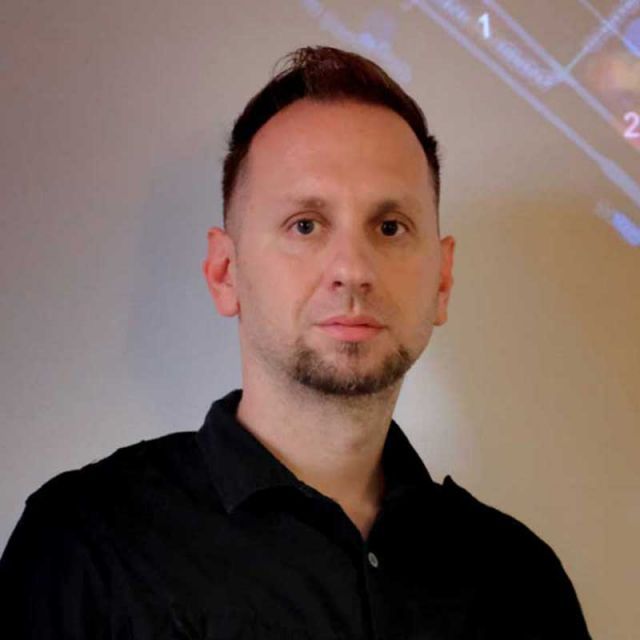
Krzysztof Janowicz
Title: Full-Stack GeoAI: Building A World On Autopilot (Worth Living
In)
Abstract: To continue contributing both downstream and upstream, GeoAI
has to
operate full-stack, i.e., throughout the entire AI stack, from the use
of core concepts for problem framing and data construction to
spatially (and temporally) explicit representation learning, AI/ML
model design, and finally geo-alignment and regional deployment. As
the meaning of "Geo" shifts upward, the resulting GeoAI layer cake has
to translate its underlying assumptions into layer-specific methods
and technologies. This keynote will outline what such a full-stack
layer cake may look like, connect past COSIT work to its layers, and
argue that (and why) moving beyond model design to study
deployment-level effects in a potential future ecosystem of AI agents
is worth our community's time and effort.
Bio: Krzysztof Janowicz is a professor at the University of Vienna working on Spatial Data Science and GeoAI. He is the head/chair of the Department of Geography and Regional Research. He is Editors-in-Chief of the Semantic Web journal by SAGE. Before moving to Austria in 2022, he was a (full) professor of Geographic Information Science and Geoinformatics at the Geography Department of the University of California, Santa Barbara (UCSB), USA. At UCSB, he was director of the Center for Spatial Studies and program chair of UCSB's Cognitive Science Program. Before moving to the West Coast in 2011, he was an Assistant Professor at the GeoVISTA Center, Department of Geography at the Pennsylvania State University, USA. Prior to that, he was briefly working as a postdoctoral researcher at the Institute for Geoinformatics (ifgi), University of Münster in Germany for the international research training group on Semantic Integration of Geospatial Information and the Münster Semantic Interoperability Lab (MUSIL). He got his PhD in geoinformatics from the University of Münster in the summer of 2008. Methodologically, his niche is the combination of theory-driven (e.g., semantics) and data-driven (e.g., data mining) techniques in the broader field of geographic knowledge representation and GeoAI. He is passionate about bringing spatial thinking to different corners of science, society, and the campus. These days, he is increasingly interested in understanding how AI systems represent and reason about geographic spaces and places, e.g., by relating neurosymbolic AI techniques to questions of bias and ethics more broadly.