 COSIT 2026
About COSIT
Established in 1993, COSIT is a biennial international conference series concerned with theoretical aspects of space and spatial information.
Where
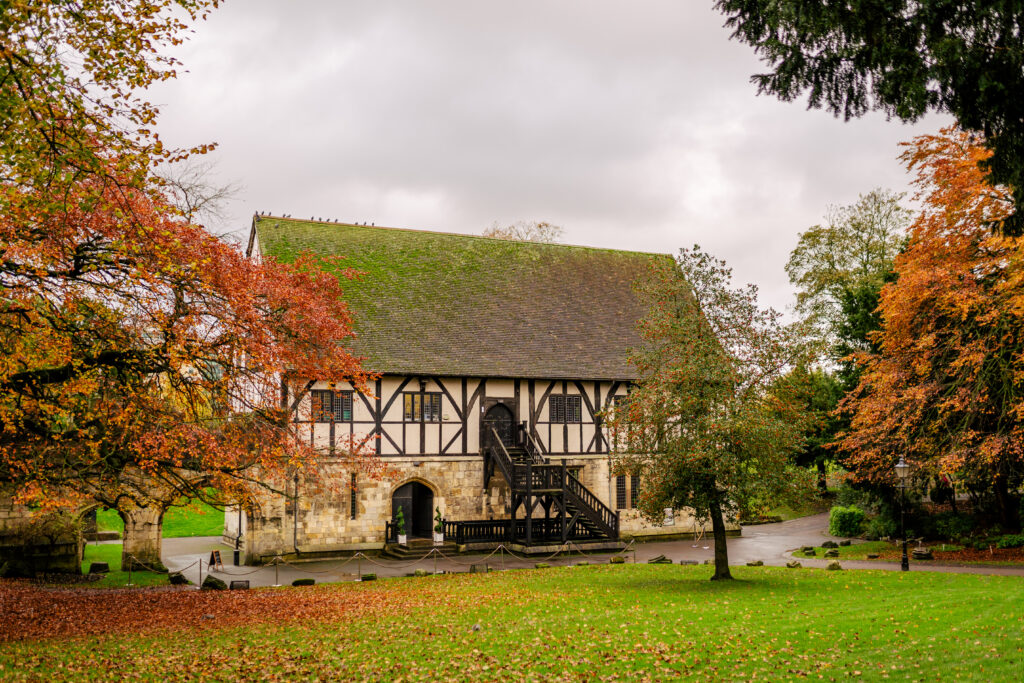
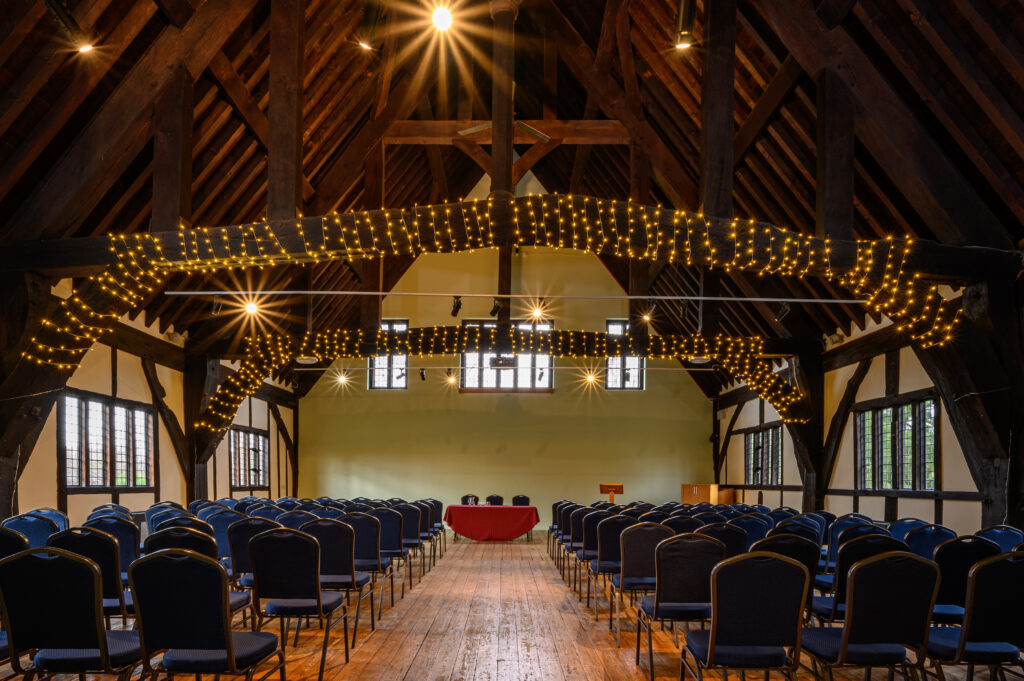
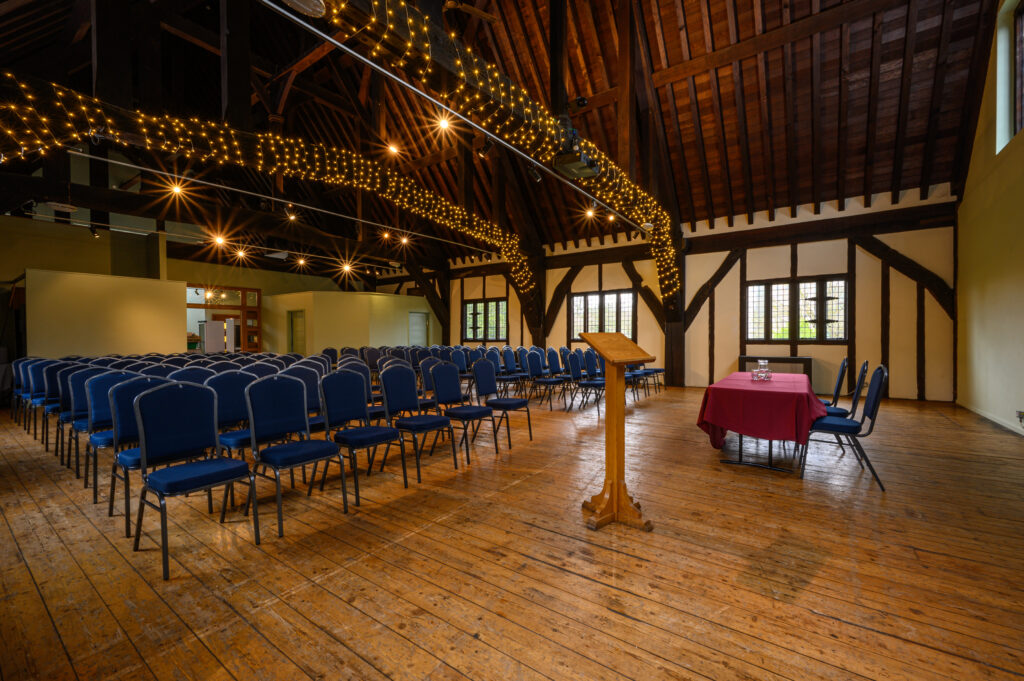
The Hospitium, York, UK
When
Tuesday to Friday
22-25 September 2026
Sponsored by



Keynote Speakers
We are excited to welcome three leading researchers as keynote speakers for COSIT 2026.

Krzysztof Janowicz
Professor, University of Vienna
Laura Alessandretti
Associate Professor, Technical University of Denmark
Hugo Spiers
Professor, University College London (UCL)Call for Papers
We are delighted to announce that the 17th edition of the Conference on Spatial Information
Theory (COSIT) will be held in York, United Kingdom, from September 22nd to
25th,
2026!
Established in 1993, COSIT is a biennial international conference series concerned with theoretical aspects
of space and spatial information. Spatial information theory examines how space and the external environment
is
experienced, represented, and communicated by humans, agents and machines.
With the goal of advancing the field of spatial information science and its bordering research areas, work
presented at COSIT has explored how decoding and making sense of space shapes human agency in different
contexts. Spatial information theory builds on a variety of perspectives on space; it advances computational
models of spaces, it challenges consolidated methods in spatial analysis and Geographic Information Science
and addresses how cognitive representations of space can be incorporated in formal models of space, at
different scales, from geographic to personal space.
We welcome contributions from across any areas under the COSIT topics listed below. This COSIT's edition
theme will be Cognition and Flows, recognising the value of considering the cognitive foundations of
human behaviour and their role in shaping large-scale geographic flows and interactions. Given the growing
wealth in large, detailed behavioural and environmental data capturing the real world, never have
we
had such opportunity to close the gap between our understanding of human spatial behaviour and aggregated
flows e.g., mobility, migration, inequalities, economic activity, spread of information, etc. In addition to
any topics related to spatial information and cognition, we particularly encourage submissions that explore
how cognition and behaviour shape the production of flows, their evolution, and ultimately influence the
nature of spaces and societies.
COSIT Topics
COSIT is an intensive, single-track conference held over four days, featuring paper presentations and
special
thematic sessions. It presents original research that spans a wide range of interdisciplinary topics, such
as
spatial cognition, wayfinding and navigation, spatial reasoning, place and space, human computer
interaction,
intelligent agents, urban analytics and their interactions with other disciplines, including spatial
analysis,
Geographic Information Science, neuroscience, cartography, philosophy of mind, and computer science.
We welcome contributions covering conference-relevant topics, such as but not limited to:
- activity-based models of spatial knowledge
- behavioural and cognitive geography
- cartography and geographic visualisation
- causal and statistical models of space
- cognitive representations of geographic information
- cognitive aspects of urban and transport analysis
- concepts of spatial information, such as fields, objects, events, networks, and processes
- context awareness in physical and social spaces
- experienced and perceived spatial phenomena (e.g. liveability, walkability)
- explainable geospatial artificial intelligence (GeoAI) and spatially informed AI
- imagery data and spatial representation
- knowledge representation for space and time
- large-language models (LLMs) and foundation models (FMs), and their utility in spatial cognition and representation
- natural (human) language descriptions of space and place
- navigation, wayfinding, and mobility of sentient beings and robots
- ontology of space and time
- place and spatial information theory
- social and cultural organisation of space
- spatial agent-based simulations of human and social phenomena
- spatial and temporal language
- spatial cognition and neuroscience
- spatial decision support, impact of model design
- spatial information retrieval and encoding of geographic texts
- spatial learning and knowledge acquisition
- spatial storytelling and interactive narratives
- theory and practice of spatial and temporal reasoning
- validity of spatial information methods
Submissions
The COSIT 2026 review process is double-blind (excluding Journal Article or Book Presentation). All
submitted manuscripts should omit authors' names, affiliations, and any other identifying information. This
may include,
but is not restricted to acknowledgments, self-citations, and references to prior work by the author(s).
Please
use the third person to identify your own prior work. All submissions must adhere to the Dagstuhl Publishing statement on the use of
Generative Artificial Intelligence (GenAI).
Submissions must adopt the LIPIcs
LaTeX template (see below). For an accepted contribution to be published in the
conference proceedings (full papers, short papers) or included in the conference programme (short poster
papers, journal and book presentations), at least one of the paper authors must register by the registration
deadline.
Full papers
Full research papers of 12-20 pages (including references) will be reviewed by three members of the
programme
committee.
High-quality
submissions will be accepted for presentation at the conference and will be published in the conference
proceedings.
Selection will be based on relevance to the conference theme and topics, scientific significance, novelty,
relation to
previously published literature, clarity of presentation, and interdisciplinary considerations. Manuscripts
must
describe original work that has not been submitted and published elsewhere.
Short papers
Short papers of maximum 7 pages (including references) present late-breaking and in-progress research, with
less emphasis on mature
results.
All submissions will be reviewed by members of the programme committee. Accepted submissions will be
selected
for
either oral or poster presentation at the conference. Authors of short papers accepted for oral presentation
will have
the option of having their papers included in the conference proceedings. All other accepted short papers
will
be
shared in a non-archival digital repository.
Journal Article or Book Presentation
The conference will run a special thematic session dedicated to providing authors of recently published journal research articles or books on spatial information theory the opportunity to present and share their work in front of the COSIT audience. The article or book must have been published during the years 2024-2026 and should have not been presented at other conferences in the discipline (e.g. COSIT2024, AGILE 2025, ACM SIGSPATIAL 2025 or GIScience 2025). Submissions should include a citation and <1 page summary of the paper's or book's relevance to COSIT. It will be screened by the programme chairs with selection based on relevance to the conference theme and topics. Please submit material directly to cosit.uk@gmail.com.
Proceedings/Template
We offer Open Access publications for the refereed submission tracks in the Leibniz International
Proceedings in
Informatics (LIPIcs) Series. LIPIcs provides a LaTeX template for papers: visit this
link. Please make sure you use the latest version of the
template on that page.
Authors unfamiliar with LaTeX are encouraged to use Overleaf, an
online LaTeX editor, easy to use and that does not require any local installation. Overleaf comes with the
LIPIcs
template pre-loaded (can be found here).
Authors who want to use other text editors should stay close to the sample article's layout for their paper
submitted
for review. Should their papers be accepted for publication, they must be converted to LaTeX using the
LIPIcs
LaTeX
class and template.
Authors are responsible for the conversion of their papers to the LaTeX template.
Accepted Papers
Browse all the contributions accepted for COSIT 2026, spanning full papers, short papers, posters, and journal article presentations.
Extending ISO-Space to Annotate Spatial Information in Route Descriptions
Samira Goudarzi Ali Akbari, Stephan Winter, Martin Tomko
Mapinou: a Game to Assess the Skill of Using Pan-Scalar Maps
Justin Berli, Guillaume Touya
RCC-8 as a Benchmark for Diagrammatic Reasoning in Multimodal Foundation Models
Robert E. Blackwell, Anthony G Cohn
Much of Geospatial Web Search Is Beyond Traditional GIS
Ilya Ilyankou, Stefano Cavazzi, James Haworth
From Markers to Meaning: A Cognitive–Symbolic Model of Cultural Placemaking
Maria Carolina Quintana Noriega, Christophe Claramunt
Mapping Cycling Experience in Valence-Arousal Space: A Geometric Approach to Appraisal Heterogeneity
Ayda Grisiute, Johanna Wörle, Panagiotis Mavros, Martin Raubal
On Spatial Reasoning and Perspective Transformation in Language Models
Haotong Zhang, Ian Pratt-Hartmann
Georeferencing Non-Gazetteered Place Names using Biological Specimen Records
Aneesha Fernando, Surangika Ranathunga, Kristin Stock, Raj Prasanna, Christopher B. Jones
Cognition and Computation of Minimal Viewpoints for Understanding Building Layouts
Ahmed Aly, Jakub Krukar
When are geographic quantities semantically compatible with each other? Towards a constructive theory of amounts, magnitudes, and proportions
Simon Scheider, Shuai Wang, Eric Jacob Top
An Extended Qualitative Model for Reasoning about 3D Objects using Depth and Different Perspectives
Martí Ejarque, Zoe Falomir
Qualitative Space of Material Documents
Mark Bell, John G. Stell
An Operator Framework for Real-time Analytics of Streamed Fields
JJ Paul, Silvia Nittel
LMM Modality Transfer: a Pre-requisite for Autonomous GIS Agents
Ivan Majic, Zexian Huang, Franziska Hübl, Krzysztof Janowicz, Meilin Shi, Mina Karimi, Zilong Liu, Alexandra Fortacz
Structuring the Underwater Environment: A Taxonomy of Aquatic Landmarks
Eva Nuhn, Sabine Timpf
From Feature Attribution to Spatial Information Structure: Interpreting Urban Pedestrian Flows with Explainable AI
Atakilti Kiros, Yuri Ribakov, Israel Klein, Achituv Cohen
A Cross-Linguistic Evaluation of Cardinal Direction Reasoning in LLMs
Panagiota Gyftou, Robert E. Blackwell, Manolis Koubarakis, Anthony G Cohn
Learning a map under positive emotions: How self-reported arousal and individual differences relate to route and survey knowledge
Veronica Muffato, Laura Miola, Francesca Pazzaglia, Chiara Meneghetti
Representing Retail Wayfinding: A Requirement-Driven Study Design for Non-Visual Supermarket Navigation
Xiang Zhou, Sabine Timpf
Habitual use of navigation systems impairs spatial learning depending on navigation strategy
Qi Ying, Christopher Hilton, Sara Fabrikant
Spatiotemporal Adaptive Learning for Flow-based Graph Neural Networks
Fengjiao Li, Meiliu Wu, Ana Basiri
Simulating Path Integration with Continuous Attractor Neural Networks
Yulin Wu, Ed Manley
Context-sensitive Spatial Deixis through the Lens of Mental Models
Adwitiya Mandal, Zoe Falomir, Kai-Florian Richter
Decision-Making Under Uncertainty in Tsunami Evacuation: Individual Differences in Information Consultation and Risk Perception
Shota Iwama, Sihwan Lee, Hong Hu, Takanori Nanahara
From Trajectories to Relations: Interpreting Overtake Manoeuvres with Large Language Models and Qualitative Spatial Representations
Jana Verdoodt, Changbo Zhang, Lars De Sloover, Nico Van de Weghe, Haosheng Huang
Feeling the heat? Heat stress impairs landmark but not route knowledge in a VR navigation task
Alessandro J. Pierro, Sara Fabrikant, Armand Kapaj
Using Social Cues for Wayfinding: An Eye-Tracking Study of Attention Allocation and Evidence Accumulation in a Virtual Reality T-Intersection
Yu Qiao, Carlo Campagnoli, Ed Manley
The Same Street, Different Safety Judgments: Evaluative Context Effects in Daytime and Nighttime Street View Imagery
Tong Qin, Nico Van de Weghe, Wim Fias, Haosheng Huang
Capturing Environmental-Scale Spatial Cognition in Applied Settings: A Field-Based Pilot with Firefighters
Chelsie McWhorter, Kathy Baylis, Mary Hegarty
Through and Through: corpus-based semantic analysis of a spatial preposition
Brandon Bennett, Maria M Hedblom
Limits of Spatial Reasoning using LLMs
Varis Ithivatana, Brandon Bennett
Document Geocoding for Inferring Spatial Familiarity within Reddit text
Paddy Smith, Ed Manley, Myles Gould
GeoKG for GeoFM: Neuro-Symbolic Integration of Semantically-enriched Geospatial-Temporal Data
Kai Moltzen, Debayan Banerjee, Julian Burmester, Anna Ehrenberg, Martin Kohler, Cedric Möller, Jann Pfeifer, Tilahun Abedissa Taffa, Hanna Marlene Schulz, Aida Usmanova, Patrick Westphal, Ricardo Usbeck
From sequential decisions to concurrent processes: advancing human navigation models for simulation
Sabine Timpf, Franziska Klügl
Towards a Validation Taxonomy for Agent-Based Models of Pedestrian Movement in Cities
Marcin Wozniak, Gabriele Filomena
Conceptual Vagueness as Humans and LLMs Represent: Evidence from Migration Distance Categorization
Songlin Wang, Krzysztof Janowicz, Ailin Benitez Cortes, Marion Borderon, Yingjing Huang, Mina Karimi, Zilong Liu, Annika Süß, Patrick Sakdapolrak
A General Syntactic Basis for a Directed RCC
Eric Jacob Top
Path choice is not determined at entry: a video-based analysis of path commitment
Wenjie Chen, Asya Natapov, Yasir Ali
GeoAI for Promoting Sustainable Mobility: Overcoming the Predictive-Policy Paradox with Personalized Utility
Imene Benzaamia, Shelan Jeawak
Space concepts in geographical information science
Franz-Benjamin Mocnik
Which Cafe Do You Mean? Generating Textual Clues from Street View for POI Disambiguation
Miona Shimizu, Junko Hayashi, HISADA Shohei, Shoko Wakamiya, Eiji Aramaki, Hiroki Ouchi
An approach for verifying terrestrial photographs via geosignatures
Ahmad Abubaka, Ajay Ajay, Tobias Brand, Moritz Denk, Tim Lehmann, Prince Oppong Boakye, Luca Venier, Samuel Yohanna, Christian Kray
The AI’s Eye for Scenic Beauty: Evaluating MLLMs' Predictive Ability and Explainability in Landscape Assessment
Shelan Jeawak
Localizing Causal Signals for Spatial Inversion: A Comparative Study of GPT-2 and BLOOM
Danai Mylonaki, Orestis-Minas Kapopoulos, Manolis Koubarakis, Robert E. Blackwell, Anthony G Cohn
Semantic Similarity Across Hierarchical Landform Types: A Knowledge Graph Embedding Approach
Jun Xu
Rank-Structured Compositional Heterogeneity in Spatial Amenity Structures
Wei Chien Benny Chin, Chun-Hsiang Chan
Generating Realistic Individual Activity Schedules via Activity Location Allocation Based on Simulated Travel Times
Tatsuya Mitomi, Yahya Gamal, Esra Suel, Gary Polhill, Daniel Konioukhov, Alison J Heppenstall
Perceived walkability as spatial information for pedestrian accessibility
Tong Chen, Asya Natapov, Taimaz Larimian
Neurosymbolic Reasoning about Street Networks: Graph-based RAG with Qualitative Spatial Representations
Reinhard Moratz, Niklas Daute, James Ondieki, Markus Kattenbeck, Ioannis Giannopoulos
Flying with clarity: An eye-tracking study on the redesigned Swiss VFR aeronautical chart
Simeon Lüthi, Tumasch Reichenbacher, Armand Kapaj
In-Context Learning to Assess Built Environment Impacts on Perceived Neighborhood Walkability Among Mobility-impaired Older Adults
Houhao Liang, Kresimir Friganovic, Joanne Kua, Noor Hafizah Ismail, Su Su, Bryan Yijia Tan, Navrag B Singh, Panagiotis Mavros
Representing Design Intention and User Experience in Complex Buildings: A Comparative Evaluation Framework and Methodological Pipeline
Yuqin Zhong, Shamsul Azrin Jamaluddin, Lara Gregorians, Panagiotis Mavros, Christoph Hoelscher
Beyond Proximity: An Anchor-Place Perspective on X-Minute City Local Living Through Individual Mobility Data
Bowen Zhang, Chen Zhong
One City, Many Representations: Perspective-Driven Urban Space in Foundation Models
Mina Karimi, Krzysztof Janowicz, Omid Reza Abbasi, Zilong Liu, Yingjing Huang, Songlin Wang, Annika Süß
Multidimensional motivations for the use of smartphone and paper maps: A web-based Evaluation Grid study
Masashi Sugimoto, Toru Ishikawa
Learning street view representations based on a spatiotemporal contrastive learning framework
Yong Li, Yingjing Huang, and Fan Zhang (DOI)
Predicting spatial familiarity by exploiting head and eye movements during pedestrian navigation in the real world
Markus Kattenbeck, Ioannis Giannopoulos, Negar Alinaghi, Antonia Golab, Daniel R. Montello (DOI)
Comparing thematic and search term-based coding in understanding sense of place in survey research
Isabel Cotton,Brooke McWherter, Thora Tenbrink, Kate Sherren (DOI)
Visual attention allocation between social and navigational cues during wayfinding
Gökçe Orlu Özen, Çağrı Imamoğlu, Elif Surer, Burçak Altay (DOI)
Golden Gate Bridge, as Always? Eliciting Prototypical Places From Autoregressive Large Language Models via Category Production
Zilong Liu, Krzysztof Janowicz, Mina Karimi, Meilin Shi, Ivan Majic, Alexandra Fortacz-Lazan (DOI)
Beyond urban form: Introducing dynamic factors in agent-based simulations of pedestrian movement
Marcin Wozniak, Gabriele Filomena (DOI)
Towards a statistical approach to humanistic-geographical place concepts
René Westerholt (DOI)
Full research papers accepted for oral presentation at the conference and publication in the
proceedings.
Full paper presentations are 15 minutes long, followed by 5 minutes of Q&A.
Extending ISO-Space to Annotate Spatial Information in Route Descriptions
Samira Goudarzi Ali Akbari, Stephan Winter, Martin Tomko
Mapinou: a Game to Assess the Skill of Using Pan-Scalar Maps
Justin Berli, Guillaume Touya
RCC-8 as a Benchmark for Diagrammatic Reasoning in Multimodal Foundation Models
Robert E. Blackwell, Anthony G Cohn
Much of Geospatial Web Search Is Beyond Traditional GIS
Ilya Ilyankou, Stefano Cavazzi, James Haworth
From Markers to Meaning: A Cognitive–Symbolic Model of Cultural Placemaking
Maria Carolina Quintana Noriega, Christophe Claramunt
Mapping Cycling Experience in Valence-Arousal Space: A Geometric Approach to Appraisal Heterogeneity
Ayda Grisiute, Johanna Wörle, Panagiotis Mavros, Martin Raubal
On Spatial Reasoning and Perspective Transformation in Language Models
Haotong Zhang, Ian Pratt-Hartmann
Georeferencing Non-Gazetteered Place Names using Biological Specimen Records
Aneesha Fernando, Surangika Ranathunga, Kristin Stock, Raj Prasanna, Christopher B. Jones
Cognition and Computation of Minimal Viewpoints for Understanding Building Layouts
Ahmed Aly, Jakub Krukar
When are geographic quantities semantically compatible with each other? Towards a constructive theory of amounts, magnitudes, and proportions
Simon Scheider, Shuai Wang, Eric Jacob Top
An Extended Qualitative Model for Reasoning about 3D Objects using Depth and Different Perspectives
Martí Ejarque, Zoe Falomir
Qualitative Space of Material Documents
Mark Bell, John G. Stell
An Operator Framework for Real-time Analytics of Streamed Fields
JJ Paul, Silvia Nittel
LMM Modality Transfer: a Pre-requisite for Autonomous GIS Agents
Ivan Majic, Zexian Huang, Franziska Hübl, Krzysztof Janowicz, Meilin Shi, Mina Karimi, Zilong Liu, Alexandra Fortacz
Short papers presenting late-breaking and in-progress research, selected for oral presentation
and publication in the proceedings.
Short paper presentations are 8 minutes long, followed by 5
minutes of Q&A.
Structuring the Underwater Environment: A Taxonomy of Aquatic Landmarks
Eva Nuhn, Sabine Timpf
From Feature Attribution to Spatial Information Structure: Interpreting Urban Pedestrian Flows with Explainable AI
Atakilti Kiros, Yuri Ribakov, Israel Klein, Achituv Cohen
A Cross-Linguistic Evaluation of Cardinal Direction Reasoning in LLMs
Panagiota Gyftou, Robert E. Blackwell, Manolis Koubarakis, Anthony G Cohn
Learning a map under positive emotions: How self-reported arousal and individual differences relate to route and survey knowledge
Veronica Muffato, Laura Miola, Francesca Pazzaglia, Chiara Meneghetti
Representing Retail Wayfinding: A Requirement-Driven Study Design for Non-Visual Supermarket Navigation
Xiang Zhou, Sabine Timpf
Habitual use of navigation systems impairs spatial learning depending on navigation strategy
Qi Ying, Christopher Hilton, Sara Fabrikant
Spatiotemporal Adaptive Learning for Flow-based Graph Neural Networks
Fengjiao Li, Meiliu Wu, Ana Basiri
Simulating Path Integration with Continuous Attractor Neural Networks
Yulin Wu, Ed Manley
Context-sensitive Spatial Deixis through the Lens of Mental Models
Adwitiya Mandal, Zoe Falomir, Kai-Florian Richter
Decision-Making Under Uncertainty in Tsunami Evacuation: Individual Differences in Information Consultation and Risk Perception
Shota Iwama, Sihwan Lee, Hong Hu, Takanori Nanahara
From Trajectories to Relations: Interpreting Overtake Manoeuvres with Large Language Models and Qualitative Spatial Representations
Jana Verdoodt, Changbo Zhang, Lars De Sloover, Nico Van de Weghe, Haosheng Huang
Feeling the heat? Heat stress impairs landmark but not route knowledge in a VR navigation task
Alessandro J. Pierro, Sara Fabrikant, Armand Kapaj
Using Social Cues for Wayfinding: An Eye-Tracking Study of Attention Allocation and Evidence Accumulation in a Virtual Reality T-Intersection
Yu Qiao, Carlo Campagnoli, Ed Manley
The Same Street, Different Safety Judgments: Evaluative Context Effects in Daytime and Nighttime Street View Imagery
Tong Qin, Nico Van de Weghe, Wim Fias, Haosheng Huang
Capturing Environmental-Scale Spatial Cognition in Applied Settings: A Field-Based Pilot with Firefighters
Chelsie McWhorter, Kathy Baylis, Mary Hegarty
Through and Through: corpus-based semantic analysis of a spatial preposition
Brandon Bennett, Maria M Hedblom
Limits of Spatial Reasoning using LLMs
Varis Ithivatana, Brandon Bennett
Document Geocoding for Inferring Spatial Familiarity within Reddit text
Paddy Smith, Ed Manley, Myles Gould
GeoKG for GeoFM: Neuro-Symbolic Integration of Semantically-enriched Geospatial-Temporal Data
Kai Moltzen, Debayan Banerjee, Julian Burmester, Anna Ehrenberg, Martin Kohler, Cedric Möller, Jann Pfeifer, Tilahun Abedissa Taffa, Hanna Marlene Schulz, Aida Usmanova, Patrick Westphal, Ricardo Usbeck
From sequential decisions to concurrent processes: advancing human navigation models for simulation
Sabine Timpf, Franziska Klügl
Towards a Validation Taxonomy for Agent-Based Models of Pedestrian Movement in Cities
Marcin Wozniak, Gabriele Filomena
Conceptual Vagueness as Humans and LLMs Represent: Evidence from Migration Distance Categorization
Songlin Wang, Krzysztof Janowicz, Ailin Benitez Cortes, Marion Borderon, Yingjing Huang, Mina Karimi, Zilong Liu, Annika Süß, Patrick Sakdapolrak
The following short paper submissions have been accepted as poster presentations at the conference and will not appear in the conference proceedings. However, authors may opt to make their papers publicly available in the COSIT Zenodo repository.
A General Syntactic Basis for a Directed RCC
Eric Jacob Top
Path choice is not determined at entry: a video-based analysis of path commitment
Wenjie Chen, Asya Natapov, Yasir Ali
GeoAI for Promoting Sustainable Mobility: Overcoming the Predictive-Policy Paradox with Personalized Utility
Imene Benzaamia, Shelan Jeawak
Space concepts in geographical information science
Franz-Benjamin Mocnik
Which Cafe Do You Mean? Generating Textual Clues from Street View for POI Disambiguation
Miona Shimizu, Junko Hayashi, HISADA Shohei, Shoko Wakamiya, Eiji Aramaki, Hiroki Ouchi
An approach for verifying terrestrial photographs via geosignatures
Ahmad Abubaka, Ajay Ajay, Tobias Brand, Moritz Denk, Tim Lehmann, Prince Oppong Boakye, Luca Venier, Samuel Yohanna, Christian Kray
The AI’s Eye for Scenic Beauty: Evaluating MLLMs' Predictive Ability and Explainability in Landscape Assessment
Shelan Jeawak
Localizing Causal Signals for Spatial Inversion: A Comparative Study of GPT-2 and BLOOM
Danai Mylonaki, Orestis-Minas Kapopoulos, Manolis Koubarakis, Robert E. Blackwell, Anthony G Cohn
Semantic Similarity Across Hierarchical Landform Types: A Knowledge Graph Embedding Approach
Jun Xu
Rank-Structured Compositional Heterogeneity in Spatial Amenity Structures
Wei Chien Benny Chin, Chun-Hsiang Chan
Generating Realistic Individual Activity Schedules via Activity Location Allocation Based on Simulated Travel Times
Tatsuya Mitomi, Yahya Gamal, Esra Suel, Gary Polhill, Daniel Konioukhov, Alison J Heppenstall
Perceived walkability as spatial information for pedestrian accessibility
Tong Chen, Asya Natapov, Taimaz Larimian
Neurosymbolic Reasoning about Street Networks: Graph-based RAG with Qualitative Spatial Representations
Reinhard Moratz, Niklas Daute, James Ondieki, Markus Kattenbeck, Ioannis Giannopoulos
Flying with clarity: An eye-tracking study on the redesigned Swiss VFR aeronautical chart
Simeon Lüthi, Tumasch Reichenbacher, Armand Kapaj
In-Context Learning to Assess Built Environment Impacts on Perceived Neighborhood Walkability Among Mobility-impaired Older Adults
Houhao Liang, Kresimir Friganovic, Joanne Kua, Noor Hafizah Ismail, Su Su, Bryan Yijia Tan, Navrag B Singh, Panagiotis Mavros
Representing Design Intention and User Experience in Complex Buildings: A Comparative Evaluation Framework and Methodological Pipeline
Yuqin Zhong, Shamsul Azrin Jamaluddin, Lara Gregorians, Panagiotis Mavros, Christoph Hoelscher
Beyond Proximity: An Anchor-Place Perspective on X-Minute City Local Living Through Individual Mobility Data
Bowen Zhang, Chen Zhong
One City, Many Representations: Perspective-Driven Urban Space in Foundation Models
Mina Karimi, Krzysztof Janowicz, Omid Reza Abbasi, Zilong Liu, Yingjing Huang, Songlin Wang, Annika Süß
Multidimensional motivations for the use of smartphone and paper maps: A web-based Evaluation Grid study
Masashi Sugimoto, Toru Ishikawa
Recently published journal articles selected for oral presentation at the conference.
Journal
article presentations are 6 minutes long, followed by 3 minutes of Q&A.
Learning street view representations based on a spatiotemporal contrastive learning framework
Yong Li, Yingjing Huang, and Fan Zhang (DOI)
Predicting spatial familiarity by exploiting head and eye movements during pedestrian navigation in the real world
Markus Kattenbeck, Ioannis Giannopoulos, Negar Alinaghi, Antonia Golab, Daniel R. Montello (DOI)
Comparing thematic and search term-based coding in understanding sense of place in survey research
Isabel Cotton,Brooke McWherter, Thora Tenbrink, Kate Sherren (DOI)
Visual attention allocation between social and navigational cues during wayfinding
Gökçe Orlu Özen, Çağrı Imamoğlu, Elif Surer, Burçak Altay (DOI)
Golden Gate Bridge, as Always? Eliciting Prototypical Places From Autoregressive Large Language Models via Category Production
Zilong Liu, Krzysztof Janowicz, Mina Karimi, Meilin Shi, Ivan Majic, Alexandra Fortacz-Lazan (DOI)
Beyond urban form: Introducing dynamic factors in agent-based simulations of pedestrian movement
Marcin Wozniak, Gabriele Filomena (DOI)
Towards a statistical approach to humanistic-geographical place concepts
René Westerholt (DOI)
The following submissions have been selected as award candidates in their respective category by the Programme Chairs based on review scores. Winners will be determined by an awards committee and announced on the last day of the conference.
Best Full Paper
RCC-8 as a Benchmark for Diagrammatic Reasoning in Multimodal Foundation Models
Robert E. Blackwell, Anthony G Cohn
Mapping Cycling Experience in Valence-Arousal Space: A Geometric Approach to Appraisal Heterogeneity
Ayda Grisiute, Johanna Wörle, Panagiotis Mavros, Martin Raubal
Georeferencing Non-Gazetteered Place Names using Biological Specimen Records
Aneesha Fernando, Surangika Ranathunga, Kristin Stock, Raj Prasanna, Christopher B. Jones
Best Short Paper
Structuring the Underwater Environment: A Taxonomy of Aquatic Landmarks
Eva Nuhn, Sabine Timpf
Habitual use of navigation systems impairs spatial learning depending on navigation strategy
Qi Ying, Christopher Hilton, Sara Fabrikant
Capturing Environmental-Scale Spatial Cognition in Applied Settings: A Field-Based Pilot with Firefighters
Chelsie McWhorter, Kathy Baylis, Mary Hegarty
Best Poster
Localizing Causal Signals for Spatial Inversion: A Comparative Study of GPT-2 and BLOOM
Danai Mylonaki, Orestis-Minas Kapopoulos, Manolis Koubarakis, Robert E. Blackwell, Anthony G Cohn
Rank-Structured Compositional Heterogeneity in Spatial Amenity Structures
Wei Chien Benny Chin, Chun-Hsiang Chan
Beyond Proximity: An Anchor-Place Perspective on X-Minute City Local Living Through Individual Mobility Data
Bowen Zhang, Chen Zhong
Thematic Sessions
Four Thematic Sessions will take place during the COSIT 2026 conference. All conference participants are encouraged to attend.
Indoor-vs-Outdoor Spatial Information: Similarities and Differences in Cognition and Computation
Spatial Information Theory, Spatial Cognition, and Spatial-HCI? What, Why, and Why now?
Leveraging Geospatial Innovation for Safeability
Generated Geography: Ressponsible GeoAI in the Era of Foundation Models
We invite proposals for thematic sessions to take place during the conference. These short sessions should focus on a specific topic within spatial information theory or tie into the general conference topic of Cognition and Flows and can take on a range of formats (e.g., lightning talks, panel, discussion, hands-on activity, workshop).
Activities that can fit into a 45 minute or 1.5 hour long session are
welcome. Thematic session organisers, speakers, and participants need to be registered for the
main conference to attend. To submit a proposal, please complete this form by Friday, February 13th February 27th, 2026.
Decisions will be made on March 6th March 13th, 2026. Please direct any questions
regarding thematic sessions to Dr. Clio Andris at clio@gatech.edu.
Doctoral Mentoring Programme
The COSIT community welcomes and supports the active participation of doctoral students. Following the
experience of the previous two editions of the COSIT doctoral mentoring programme, the Doctoral Mentoring
Programme at COSIT
2026 revolves around three different pillars for engaging with the COSIT community:
- Feedback: Choose from three different formats to present your doctoral research and receive constructive community feedback, based on your stage of study.
- Mentorship: Meet one-on-one with experienced international scholars in the field.
- Insights Presentation: Present your work as a lightning talk during a dedicated conference session.
Feedback Pillar
Based on your research experience and stage of study, choose how you wish to contribute and get
feedback:
- Early Stage Proposal: Submit a proposal on how you are going to tackle a particular research problem or question, how you plan to use a specific method, etc.
- Later Stage Summary: Submit a summary of your ongoing PhD research. This is meant for ongoing work in the middle-to-late stages of preparation.
- Peer-Reviewed Submission: Submit your research for peer review, for either the full or short paper tracks. There will be a 'Best Student Paper' award (details to follow).
Mentorship Pillar
The doctoral mentoring chair will match the candidate with an experienced scholar who will provide feedback and discuss selected research issues in one-to-one, in person meetings.
Insights Presentation Pillar
One conference session at this year’s COSIT 2026 conference will be dedicated to doctoral lightning presentations, open exclusively to doctoral students. As COSIT is a single-track conference, the participant will present to all conference participants. This is a fantastic opportunity for early career researchers to present their work to a large audience of like-minded researchers.
How to Apply
To apply for the doctoral mentoring program, submit an Expression of Interest (EOI), up to 7 pages in length (maximum). Please use the LaTeX template provided for the conference to write your EOI. You will need to submit this as a single PDF document through the form below. The EOI must include:
- A brief biographical note, including contact data (name, affiliation, email address) and stage of your doctoral degree (e.g., First year, Final Year, etc.)
- A maximum one-page overview of your PhD research or proposed research.
- A maximum one-page overview of your PhD research or proposed research.
- Your chosen type of Feedback Pillar A, B, or C, for the selected option:
- Early Stage Proposal: Provide a detailed account of your research problem / issue, method, etc., and the specifics of what you wish to get feedback on.
- Later Stage Summary: Provide a detailed summary/proposal/plan of your PhD research, with enough specifics to enable specific feedback on it.
- Peer-Reviewed Submission: Provide the submitted abstract of your paper for peer review and describe how this paper fits into your overall PhD research goals.
All submitted EOIs will be ranked but not formally peer-reviewed. Accepted EOIs will be distributed among the mentees and their COSIT 2026 mentors as a single PDF document. Doctoral mentees will also be encouraged to publish their one-page PhD topic overviews (item 2 above) in a document that will be shared with all conference attendees and archived via the Open Science Framework with the volume DOI.
Please complete this form to submit your Expression of Interest (EOI) to the Doctoral Mentoring Chair. Any questions regarding this programme can be sent to Dr. Crystal Bae at cbae@uchicago.edu.
Important Dates
Note: all the COSIT 2026 submission deadlines follow the AoE (Anywhere on Earth) time zone!
Full paper submission: February 20, 2026 February 27, 2026
Full paper decision: April 10, 2026 April 20, 2026
Short paper submission: April 17, 2026 April 30, 2026
Short paper decision: May 15, 2026 May 26, 2026 May 29, 2026
Thematic sessions proposals: February 13, 2026 February 27, 2026
Thematic sessions decision: March 6, 2026 March 13, 2026
Doctoral mentoring programme submission: April 30, 2026 June 5, 2026
Doctoral mentoring programme decision: May 15, 2026 June 12, 2026
Journal article / book presentation submission: May 15, 2026
Journal article / book presentation decision: May 29, 2026
Registration
Registration covers the following: attendance to the conference, coffee and snacks and several social activities throughout the conference (more information to come). All prices include applicable taxes.
| Type | Early Bird (by June |
Full Price |
|---|---|---|
| Academic | £400 | £450 |
| Student | £300 | £350 |
| Developing Nation* | £200 | £250 |
* These tickets are only available to those affiliated with institutions in Developing Nations (based on ODA definitions). Please get in touch with us for more information on reduced fare for participants from developing nations and for large group discounted rates.
Cancellation Policy
If you cancel your registration, refunds will be made in accordance with the following schedule:
- For cancellations requested on or before 1 August 2026, 100% of the registration fee will be refunded (please be aware that due to exchange rate fluctuations, the amount you receive may differ from the original registration fee).
- For cancellations made on or after 2 August 2026, no refunds will be given.
- There will be no refunds for the authors of accepted papers.
Requests for cancellation must be sent to: cosit.uk@gmail.com.
Code of Conduct
COSIT 2026 aims to be a welcoming, respectful and inclusive event for everyone, whatever their career stage, discipline, background or identity. This code of conduct applies to all participants, including attendees, speakers, organisers, volunteers, sponsors and guests. It covers all conference spaces and activities, in person and online, including talks, thematic sessions, breaks, social events and conference-related communication.
What we expect
- Treat everyone with courtesy and respect, and engage with ideas rather than attacking people.
- Be considerate in discussion: make room for others to speak, particularly those newer to the field.
- Respect people's boundaries, including requests not to be photographed or recorded, and "no" in any form.
- Look out for one another, and let a welfare contact know if you are concerned about someone.
What is not acceptable
Harassment, discrimination and intimidation in any form will not be tolerated. This includes offensive comments or jokes related to any personal characteristic; unwelcome physical contact or sexual attention; stalking or following; photographing or recording someone without consent; sustained disruption of talks or events; and retaliation against anyone who raises a concern.
Raising a concern
If you experience or witness behaviour that makes you uncomfortable, please speak to any of our welfare contacts. You don't need to be certain that something breaches this code, and you decide what, if anything, you would like to happen next.
- Crystal Bae, cbae@uchicago.edu
- Gabriele Filomena, gabriele.filomena@liverpool.ac.uk
Welfare contacts will be present throughout the conference, including at social events. Concerns will be handled as confidentially as possible. We will only share information where necessary to act on a report or where someone is at risk of harm.
What happens next
The organising committee may take any action it considers appropriate, including a warning, removal from the conference without refund, or referral to the participant's institution where relevant. Reporting to the conference does not affect your right to report to your own institution or to the police.
Emergencies
If you or someone else is in immediate danger, call 999. For urgent medical advice that isn't an emergency, call NHS 111.
York
York, a historic city nestled in northern England, boasts a rich history that stretches back to its Roman origins. Its urban landscape features the Gothic grandeur of York Minster, the narrow streets of the Shambles, and remnants of Roman walls. It is an active urban hub of commerce, culture, and education, with a high density of entertainment venues. Its compact, walkable layout means it is regularly featured as one of the best cities to live in the UK.
Conference Venue
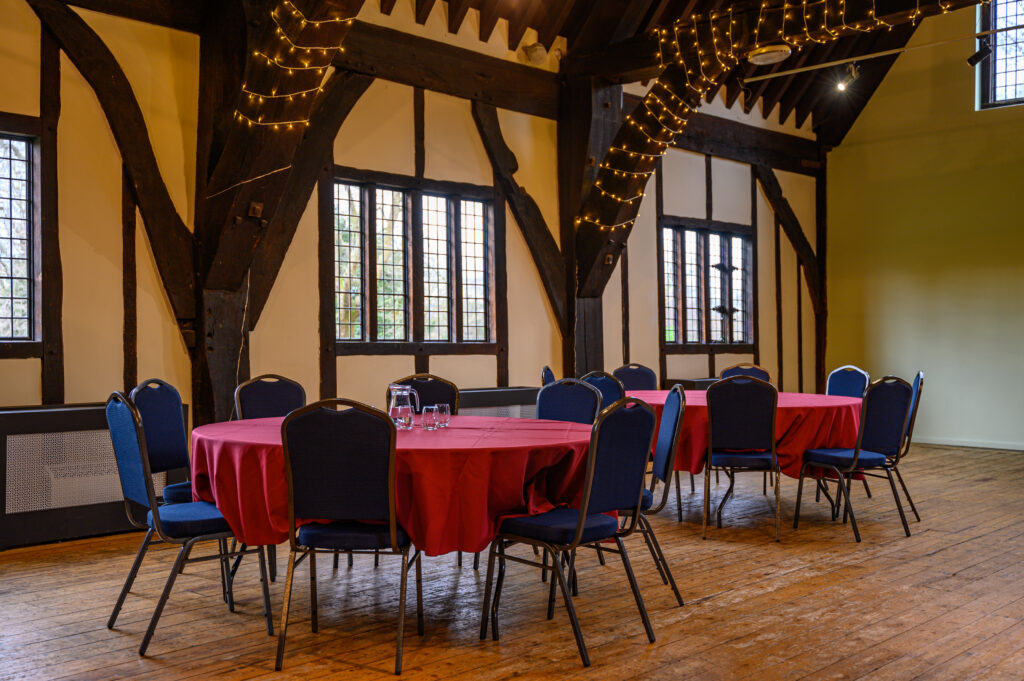
The Hospitium
The Hospitium is a 14th century two-storey building set within the beautiful York Museum Gardens, overlooked by the striking ruins of the Grade 1 listed St. Mary’s Abbey.
Transportation
While York does not have an international airport itself, it is located on the East Coast Mainline of the UK rail network and continues to be a major rail hub. There are frequent, direct trains to London (~2hrs), Leeds (30mins), and Manchester (~1.5hrs). Trains from Manchester Airport are direct (hourly), while connections from Leeds-Bradford Airport and London Airports require an additional train connection. The centre of York is very old and compact, and there are heavy limits on vehicular movement, thus making your experience pleasant and enjoyable.
Accommodations
York is a popular tourist city and has many hotels available within a walking distance to the conference
venue. While York is not the cheapest city in the UK for hotels, there are a variety of options available. The
map below shows some possibile accomodations around the conference venue. Click on View larger map to see the location of the conference venue (blue pin) and the walking
distance to each listed accomodation. We highly suggest that you book a hotel room earlier than later as
September can be a busy month in York.
A camping community is forming around COSIT 2026 where some attendies are planning to book pitches at The Riverfront York on the banks of the River Ouse. The site takes tents, caravans, and camper vans. If you'd like more information, feel free to send an email to Ruth Dalton and/or Jakub Krukar.
Visa Information
Please visit this website to check if you will need a UK visa to attend the conference. Please contact us if you require a letter of invitation for the UK visa application.
Organizing Committee
Local Organizing Committee
Programme Chairs
Programme Committee
Hoda Allahbakhshi, University of Zurich
Clio Andris, Georgia Institute of Technology
Nathalie Aussenac-Gilles, Centre national de la recherche scientifique (CNRS)
Crystal Bae, University of Chicago
Michela Bertolotto, University College Dublin
Stefano Borgo, Consiglio Nazionale delle Ricerche
Boyan Brodaric, Natural Resources Canada
Vanessa Brum-Bastos, University of Canterbury
Guoray Cai, Pennsylvania State University
Gilberto Camara, Instituto Nacional de Pesquisas Espaciais
Adrijana Car, Fachhochschule Kärnten
Christophe Claramunt, Naval Academy Research Institute
Eliseo Clementini, University of Aquila
Andrew Crooks, State University of New York at Buffalo
Gamze Dane, Eindhoven University of Technology
Leila De Floriani, University of Maryland
Stef De Sabbata, University of Leicester
Géraldine DEL Mondo, Laboratoire d'Informatique, de Traitement de l'Information et des Systèmes
Urska Demsar, University of St. Andrews
Somayeh Dodge, University of California
Heshan Du, University of Nottingham Ningbo China
Matt Duckham, Royal Melbourne Institute of Technology
Sara Fabrikant, University of Zurich
Zoe Falomir, Umea University
Gabriele Filomena, University of Liverpool
John G. Stell, University of Leeds
Mark Gahegan, University of Auckland
Ioannis Giannopoulos, Technische Universität Wien
Amy Griffin, Royal Melbourne Institute of Technology
Christopher Hilton, Technische Universität Berlin
Arvid Horned, Umea University
Yingjie Hu, State University of New York at Buffalo
Carolynne Hultquist, University of Canterbury
Toru Ishikawa, Toyo University
Krzysztof Janowicz, Universität Vienna
Armand Kapaj, University of Zurich
Markus Kattenbeck, Technische Universität Wien
Carsten Keßler, Bochum University of Applied Sciences
Peter Kiefer, ETH Zurich
Alexander Klippel, Wageningen University and Research
Manolis Koubarakis, National and Kapodistrian University of Athens
Christian Kray, University of Münster
Jakub Krukar, University of Münster
Saskia Kuliga, Deutsches Zentrum für Neurodegenerative Erkrankungen
Rui Li, State University of New York at Albany
Bernd Ludwig, Universität Regensburg
Maria M. Hedblom, Universität Bremen
Ed Manley, University of Leeds
Grant McKenzie, McGill University
Sara Migliorini, University of Verona
Franz-Benjamin Mocnik, Paris Lodron Universität Salzburg
Antoni Moore, University of Otago
Reinhard Moratz, Westfälische Wilhelms-Universität Münster
Jeremy Morley, Hon Prof, University College London
Till Mossakowski, Universität Osnabrück
Gerhard Navratil, Technische Universität Wien
Eva Nuhn, Universität Augsburg
Ross Purves, University of Zurich
Daniel R. Montello, University of California
Martin Raubal, ETH Zurich
Tumasch Reichenbacher, University of Zurich
Kai-Florian Richter, Umea University
Johannes Scholz, Paris Lodron Universität Salzburg
Angela Schwering, University of Münster
Tabea Sonnenschein, Utrecht University
Emmanuel Stefanakis, University of Calgary
Kathleen Stewart, University of Maryland, College Park
Henrikki Tenkanen, Aalto University
Martin Tomko, University of Melbourne
Nico Van de Weghe, Universiteit Gent
Judith Verstegen, Utrecht University
Zhangyu Wang, University of Maine System
René Westerholt, TU Dortmund
Stephan Winter, University of Melbourne
Qi Ying, University of Zurich
May Yuan, University of Texas at Dallas
Donatella Zingaro, University of Zurich
Chenyu Zuo, Universität Augsburg
Sponsors
We would like to thank the following sponsors for their support of COSIT 2026.
Contact
If you have any questions, please don’t hesitate to contact the organizing committee using the email address or the form below.
Address
Museum Gardens, York YO30 7DR, United Kingdom